Fiber emergency? 24-hour restoration line:24-hour line: 717.564.1896 How it works

Services We Provide

Structured cabling, fiber, and low-voltage systems for new construction, renovations, and buildings in operation, designed or reviewed by an RCDD and installed by Corl crews.

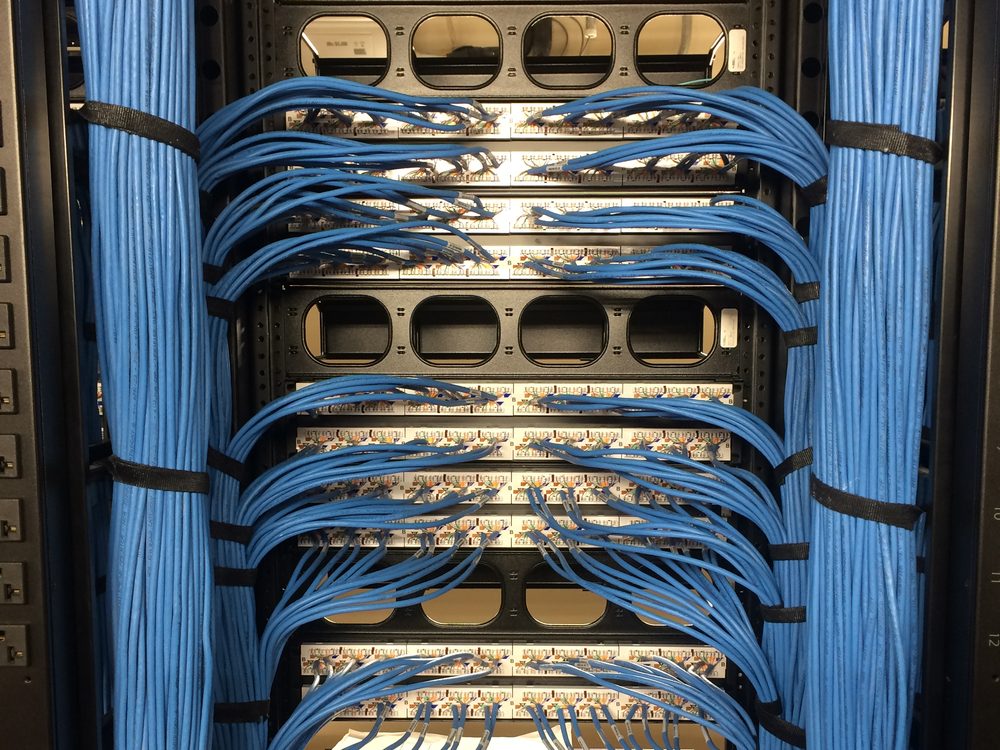
Rear of a rack: blue Category 6 cable bundles dressed on hook-and-loop and terminated on patch panels

Structured Cabling

Network and data cabling: Category 6 and 6A (Cat 6 and Cat 6A) horizontal cabling, copper backbone, and voice-grade cabling for new construction, renovations, and tenant fit-outs, supported on J-hooks, cable tray or ladder rack. We install to whatever the spec names. Corl is a certified installer for Corning, Leviton, Hubbell, CommScope, and Panduit, and we also install Belden, Berk-Tek, and other specified systems. We label to your standard, test every link, firestop our own sleeves and penetrations, and register the manufacturer's 20- to 25-year warranty in the owner's name. Division 27 submittals and shop drawings (Section 27 10 00, Structured Cabling), redline as-builts, and the closeout package come with the job.

On renovations we handle the demolition and removal of old and abandoned cable, and we service and extend existing Category 5e (Cat 5e) systems as well as Cat 6 and Cat 6A.

Request a Quote
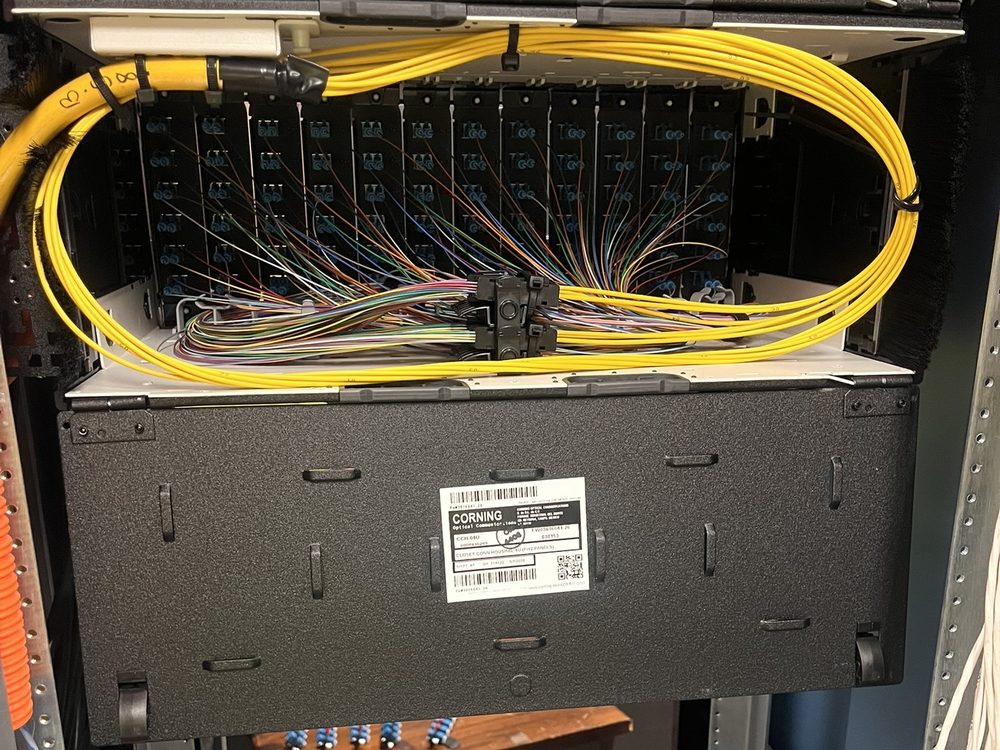
Corning fiber enclosure open: yellow single-mode jumpers coiled above pigtails fanned out to the adapter plates

Fiber Optics

Single-mode (OS2) and multimode (OM3 and OM4) fiber for backbones, campus links, and fiber-to-the-desk. Installation, termination with LC, SC and ST connectors, fusion splicing, repair, and certified testing with documented results: Tier 1 loss testing and Tier 2 OTDR testing. We install and test pre-terminated MPO/MTP trunks and cassettes, terminate and test fiber that other contractors pull, and test existing fiber backbones before a new system goes on them. Corning is our standard fiber platform; we install to your spec when the owner has one. Our largest fiber-to-the-desk work to date: complete installations at three Air National Guard bases, each more than a year of work.

Request a Quote
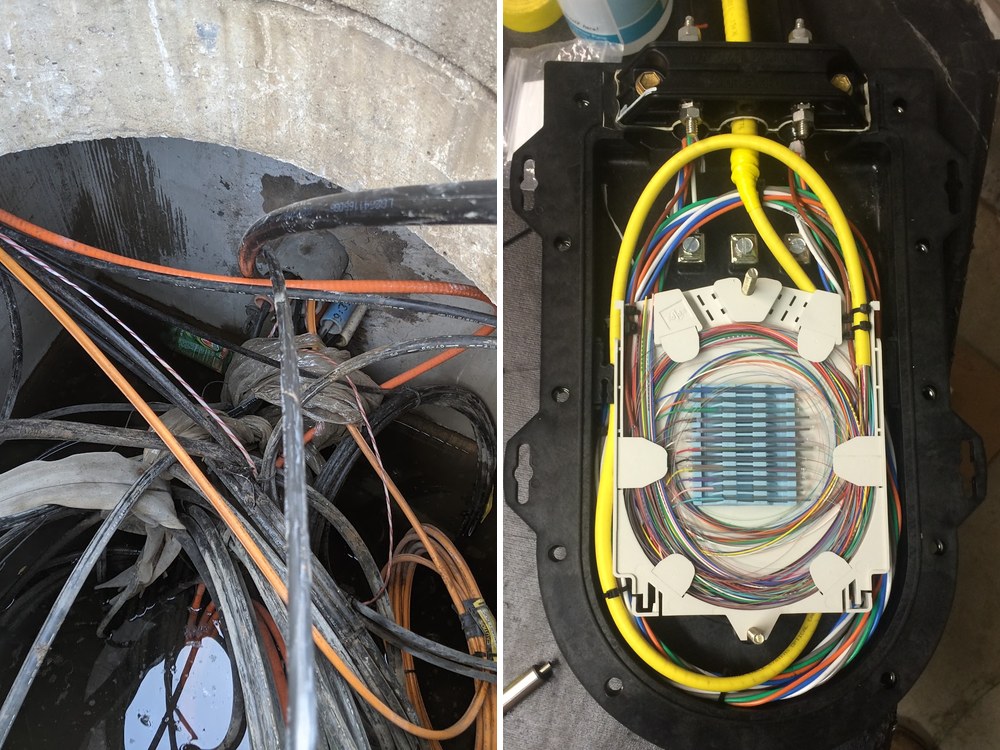
Left: fiber cables and orange innerduct entering the duct bank in a manhole during a repair. Right: an open fiber splice closure with the splice tray and fibers laid in

Emergency Fiber Restoration

Fiber cut? Call 717.564.1896, any hour. Tell us it is a fiber emergency and we dispatch a splicing crew with the OTDR, fusion splicer, splice closures, and cable to get you back up.

The cable, closures and hardware come from our own Harrisburg warehouse, where we stock material from many manufacturers for emergencies and rush jobs.

Emergency fiber repair covers inside-plant (ISP) and outside-plant (OSP) fiber: building backbone and riser cable, campus links, and aerial and underground routes, after backhoe and directional-bore strikes, cable brought down with a pole or aerial strand, water in a splice closure or handhole, and damage from construction or rodents inside the building. Single-mode and multimode, ISP and OSP.

The crew locates the break with the OTDR, restores service first with an emergency splice or a temporary cable, then returns for the permanent repair: a new cable section, new closures, full re-testing, and updated documentation so your records match what is in the ground.

Call 717.564.1896
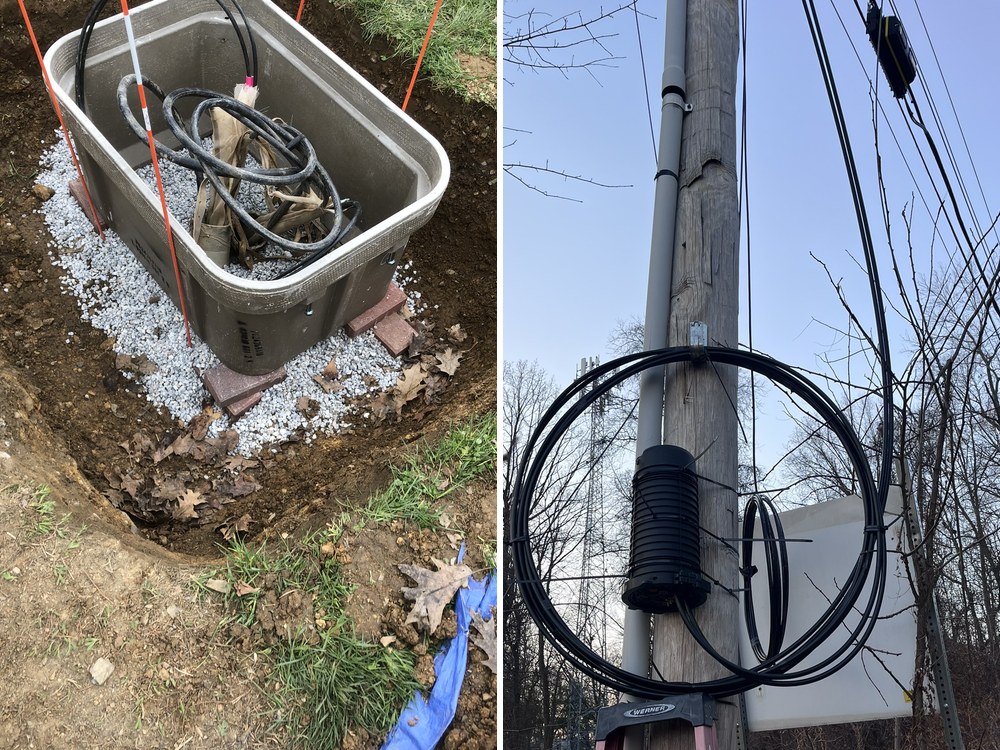
Left: underground handhole set on a gravel bed in an open excavation, conduit and fiber coiled inside. Right: a fiber splice closure and slack loop lashed to the strand on a utility pole

Outside Plant

Cable between buildings and across campuses, underground and aerial: a single link between two buildings, or a fiber backbone for an entire campus.

Route survey: Before we price a link, we walk the route. On pole lines we photograph and mark up every pole, draw the guying plan, and file the pole-attachment application with the utility (PPL applications go through Katapult). Then we follow it through the utility's engineering and make-ready.

Underground: conduit and duct systems, directional boring and open trench through our excavation partners, PA One Call locates, direct-bury and armored fiber, building entrance protection and grounding.

Aerial: fiber and copper placed on utility poles, strand-and-lash or self-supporting (ADSS) fiber, and the drop into the building.

We price and build single-mode links from 6 to 288 strands, from a few hundred feet to campus scale.

Request a Quote
See the engineering behind our pole surveys

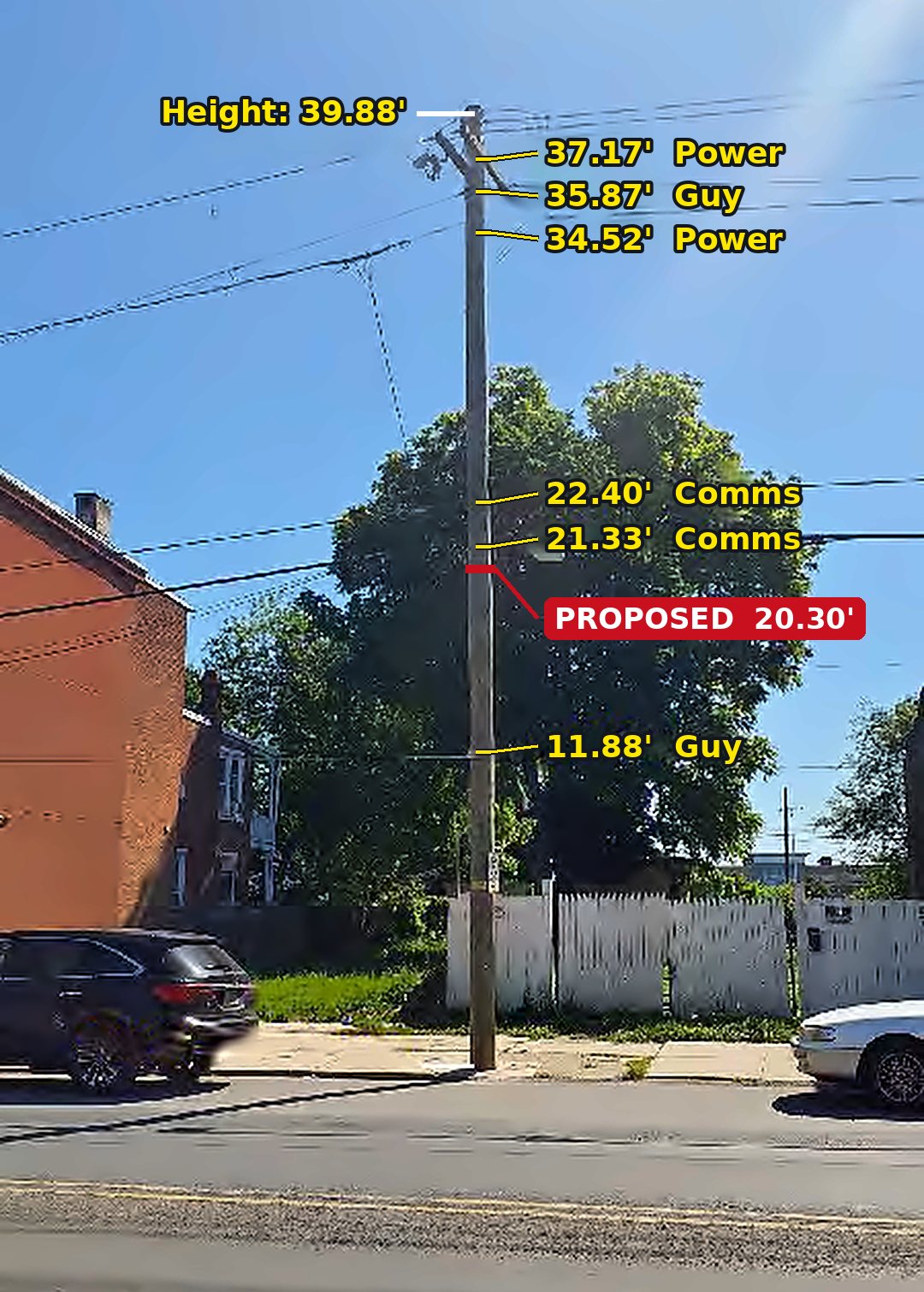
Before a new aerial fiber run can go up, every pole on the route is surveyed and the new attachment is engineered to fit below what is already there. Here is one pole from a recent route, from our field survey to the height we proposed to the utility.

Survey photo of a 39.88-foot utility pole with laser-measured heights: power at 37.17 and 34.52 feet, a guy at 35.87, existing communications cables at 22.40 and 21.33 feet, a guy at 11.88, and the proposed new fiber attachment at 20.30 feet marked in red
1. Field survey. The pole height and every attachment, measured with our laser equipment. The proposed attachment is in red.
Pole diagram: communications space on the surveyed poleExisting fiber at 22.40 feet and existing cable at 21.33 feet. The proposed new strand and fiber go at 20.30 feet, 12 inches below the lowest existing cable and 20.30 feet above the ground. A guy is attached at 11.88 feet. Power is higher on the pole, from 34.52 to 37.17 feet.▲ Power higher up: 34.52' to 37.17'ground20'15'10'5'22.40' existing fiber21.33' existing cablePROPOSED 20.30'new 1/4 in. strand + fiber,12 in. below the lowest cable11.88' guy20.30 ftabove ground
2. Pole diagram. The communications space on the same pole, with the existing cables and the proposed attachment.
  1. Walk the route. Every pole is photographed, and its tag, owner and condition are recorded, along with guys, anchors and anything that will need make-ready.
  2. Laser-measure every pole. The pole's height and every attachment on it (power, communications, guys and equipment) are measured with our laser survey equipment and marked on the photo.
  3. Set the proposed height. The new strand goes 12 inches below the lowest existing communications attachment. If that would put it below the lowest height the utility allows, we propose the minimum and ask the utility's make-ready engineering to assign the final position.
  4. Draw a diagram for every pole. One page per pole: the field photo, the communications space with the proposed attachment, and the full list of attachments.
  5. File and follow through. We file the pole-attachment application with the utility (PPL applications go through Katapult), track make-ready, and attach at the height the utility assigns.
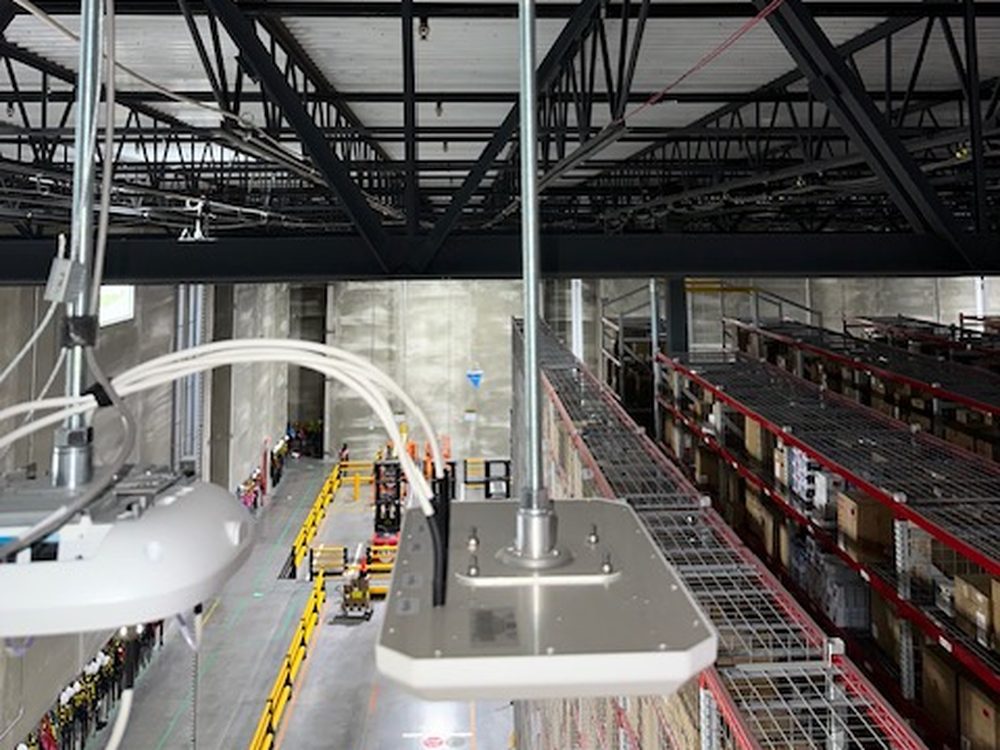
Access points on ceiling-mounted masts above the racking aisles of a distribution center

Wireless Surveys & Access Point Installation

Ekahau heat-mapping, before and after. After repeated requests for pre- and post-installation heat maps, several of them from Fortune 100 and Fortune 500 companies, we put a wireless survey engineer on staff, an Ekahau Certified Survey Engineer (ECSE Design). He surveys anything from a small office to a 1.5 million-square-foot warehouse with Ekahau, as a stand-alone service or as the complete package: pre-installation survey, cable installation, access points of your choosing mounted and connected, and the post-installation validation survey.

Ekahau Wi-Fi site surveys before and after installation: a predictive design from your floor plans, a pre-installation survey that maps coverage, interference, and access point placement, and a post-installation validation survey with heat maps that prove the network performs where people actually work.

Wi-Fi installation: we install the Category 6A drops, mount the wireless access points (WAPs), label and document every AP by location and MAC address, and hand the network team a report they can keep. We also run AP refresh programs, swapping end-of-life access points and verifying the cabling behind them, at one office or across a whole portfolio. Where running cable between buildings is not practical, we install point-to-point wireless bridge links.

Request a Quote
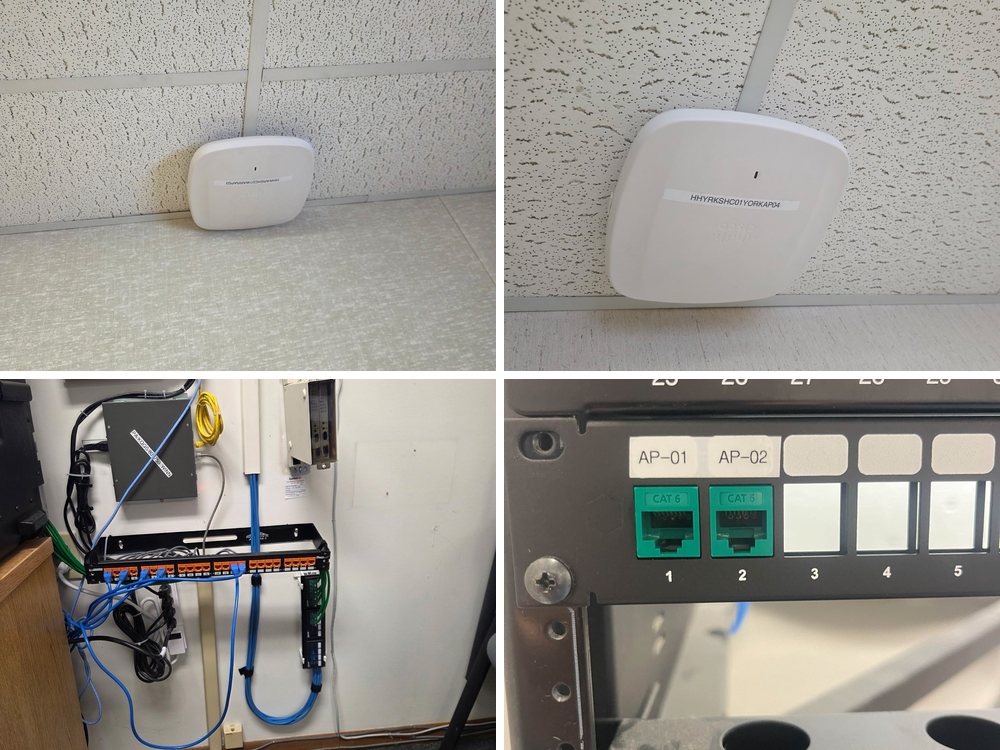
Four of the state health center sites after installation: ceiling-mounted access points, a wall-mounted switch and fiber enclosure, and patch panel ports labeled AP-01 and AP-02

Multi-Site Rollouts

Standardized cabling and wireless installations across many locations at once, for state agencies, health systems, school districts, and corporate portfolios. One materials standard, geographic routes so a crew finishes a region before moving on, a per-site closeout package with test results and photos, and one point of contact for the whole program.

Recent example: a 44-site rollout for a Commonwealth agency, run as eight routes statewide.

Request a Quote
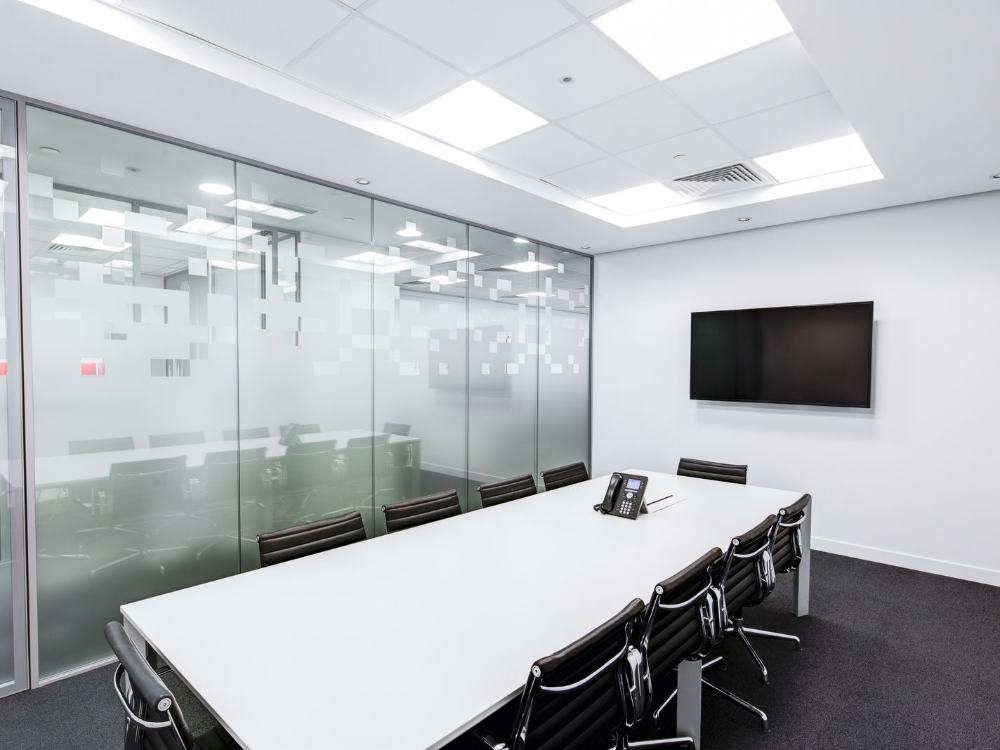
Glass-walled conference room with a wall-mounted display

AV & Collaboration Rooms

Cabling and device installation for conference and huddle rooms: data and coax to video-conferencing units and displays, owner-furnished room systems (Poly, Logitech) mounted and connected, and a working-room check before we leave.

Request a Quote
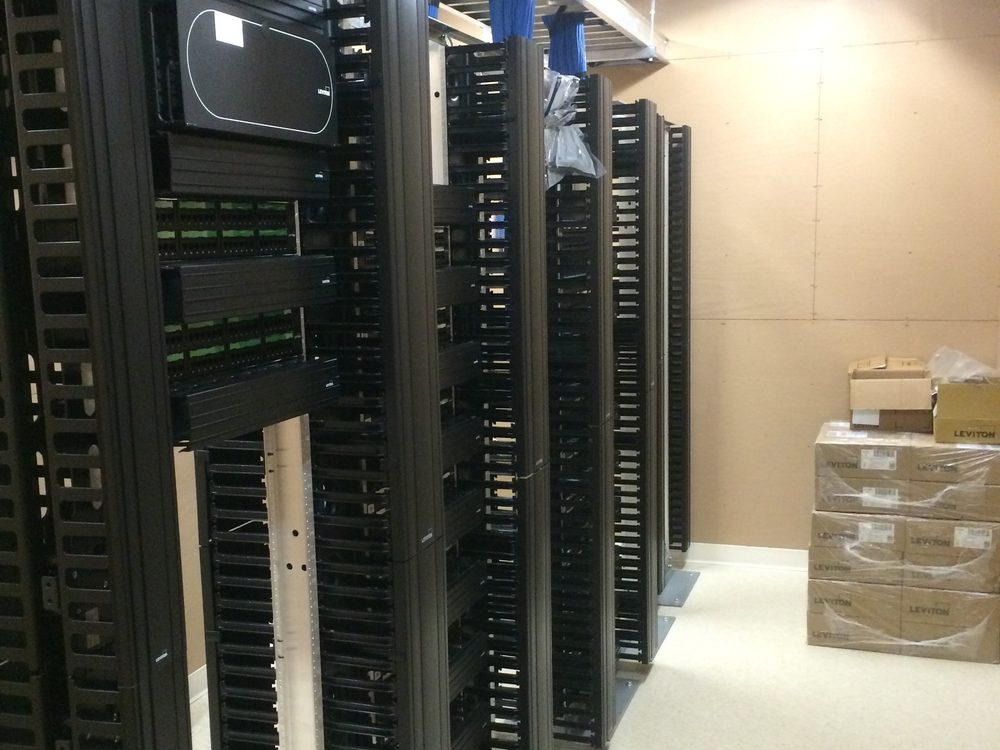
Row of new equipment racks with vertical cable managers in a finished telecom room

Telecom Rooms, Racks & Cabinets

MDF and IDF telecom rooms, server rooms and data centers: equipment racks, floor-standing and wall-mount enclosures (APC NetShelter and Hoffman), ladder rack and cable management, the copper and fiber cabling between racks, and telecommunications grounding and bonding per TIA-607. We build the room out so the network team can rack equipment the day we leave.

Request a Quote
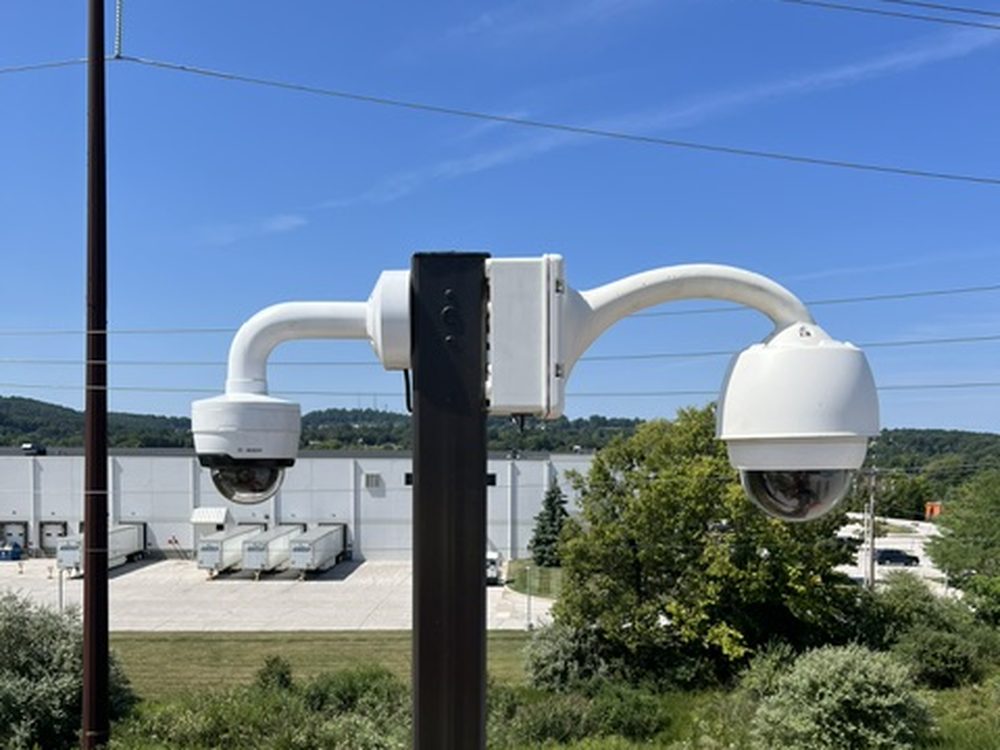
Two PTZ dome cameras mounted on arms at the top of a pole outside a distribution center

Security & Low-Voltage Systems

Cabling and device installation for security camera (CCTV) and video surveillance systems, access control at doors and gates, nurse call, and CATV. On Division 27 and Division 28 packages we mount and cable the devices, IP cameras included, and hand off a tested, labeled system to the integrator or owner for programming.

Request a Quote
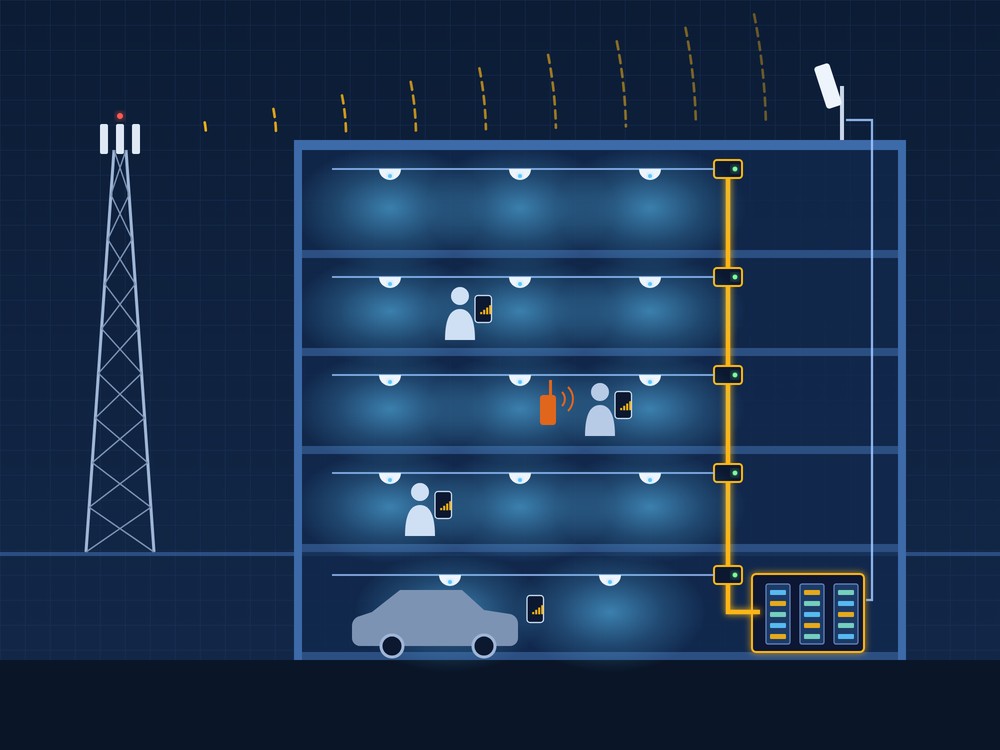
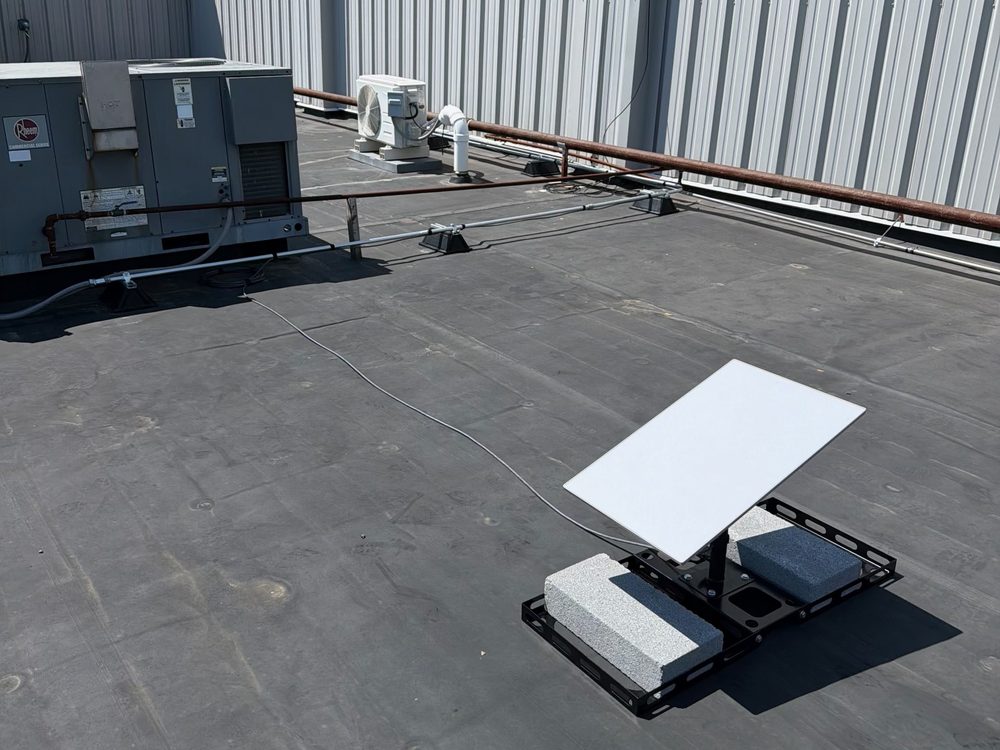
Illustration of an in-building DAS: a donor antenna on the roof picks up the carrier signal, the head-end sits in the garage level, a fiber backbone runs up the riser to a remote unit on every floor, and ceiling antennas cover each floor and the garage for cell phones and public-safety radios

Distributed Antenna Systems (DAS)

In-building cellular and public-safety radio coverage for buildings that block the signal: hospitals, warehouses, parking structures, government and campus buildings. We install DAS with our carrier and integrator partners, who design and commission the system: the coax and fiber backbone, remote units and antennas, the riser and horizontal pathways, and the head-end room, built to the partner's design and, where required, the public-safety radio (ERRCS or ERCES, often called a BDA system) requirements of the local authority. Testing and closeout documentation come with the job.

Request a Quote
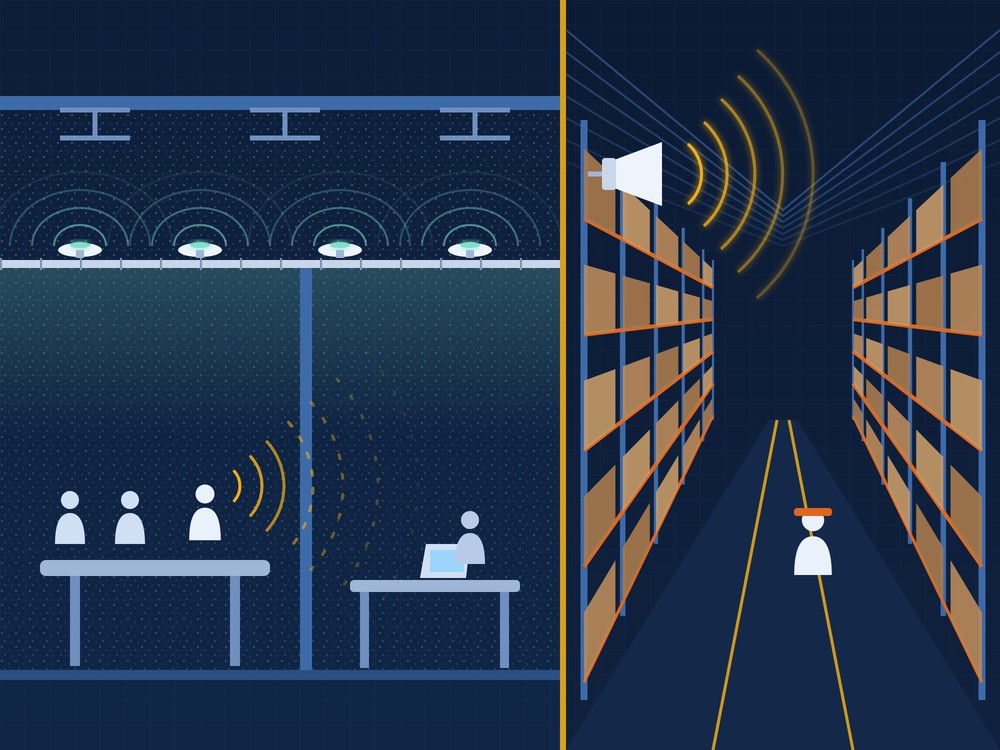
Illustration: left, sound-masking emitters in the ceiling plenum fill a conference room and the office next door with an even background sound, so speech fades before it reaches the next room; right, a paging horn sounding down a warehouse aisle

Sound Masking & Paging

What sound masking is. A sound masking system plays a low, evenly tuned background sound through small speakers above the ceiling or in the open plenum. It does not cancel noise; it raises the floor just enough that speech cannot be understood from the next office, the corridor or the other side of a wall. Where you need it: SCIFs and other secure rooms on military and civilian government sites, where the rule is that a conversation inside the room must not be understood outside it and sound masking is one of the accepted ways to meet it; boardrooms and conference rooms where critical company meetings take place; HR, legal and finance areas; clinics and counseling rooms; and open offices where people need to concentrate.

We install and tune Lencore and Cambridge Sound Management (Biamp) sound masking systems. Both are used in SCIFs and security-sensitive government facilities as well as corporate offices; Lencore's SCIF and secure-area page and Cambridge's government and military page explain the acoustic requirements. We commission the system to the speech-privacy level the room needs and document the settings.

Paging. Overhead paging and public address (PA) systems, analog and digital, for warehouses, plants, schools and offices: ceiling speakers and horns, zone amplifiers, network (IP) paging endpoints, the tie-in to the phone system, and the cabling behind all of it. We install, tune and document the system, and we service what we install.

Request a Quote
Designer marking up a set of drawings

Design & Consultation

RCDD design and review for premise cabling: pathway and space planning, drop counts, telecom room layouts, specification writing, and standards compliance for owners, architects, and engineers who want the infrastructure right before the walls close.

Request a Quote
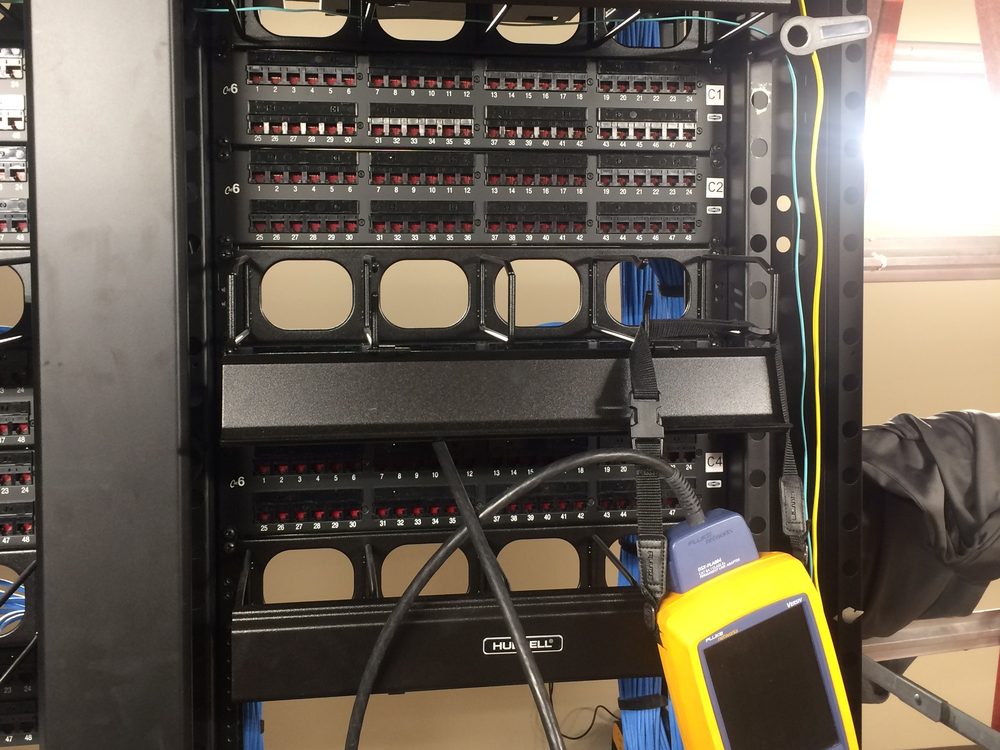
Technician certifying a link with a Fluke tester at a Hubbell patch panel

Moves, Adds, Changes & Service

One drop or a whole floor. Troubleshooting, testing, re-terminations, relocations, and additions, scheduled around your operation, and the same crews back in buildings we installed. We also clean up telecom closets: MDF and IDF rooms re-dressed, re-patched and re-labeled.

We also take smart-hands and dispatch service tickets from NOCs and service-management companies for their client sites across Pennsylvania and Maryland: dead phone lines, failed jacks, camera drops, AP swaps. One technician, not-to-exceed pricing, connectivity verified, and the local contact updated so the ticket can be closed.

Request a Quote
American flag in front of a stone government building

Federal & Secure Facilities

Cabling for military bases and federal buildings, including network cabling for SCIFs and other secure rooms. Our crews are accustomed to escorted, badge-processed work on military installations and secure sites, and to Davis-Bacon and Pennsylvania prevailing-wage compliance with certified payroll. Corl is an SBA-certified Service-Disabled Veteran-Owned Small Business (SDVOSB), eligible to compete for SDVOSB and VOSB set-aside contracts, and works as a prime contractor or as an SDVOSB subcontractor to primes. Its owner spent 36 years installing communications infrastructure for the Air National Guard, on military installations and secure sites around the world.

Request a Quote

Working in occupied healthcare space

Corl crews carry OSHA 10 and OSHA 30 certifications, work under hospital orientation and access rules, and own four ICRA containment carts for infection-control work in operating clinical areas.

Warehouse and distribution work

Warehouses, distribution and fulfillment centers are a Corl specialty: high-bay access-point and camera cabling over the racking, cable tray and conduit runs the length of the building, dock and office fit-outs, and campuses of several buildings. We install the conduit and Unistrut structures that carry the access points and cameras, and our crews include trained lift operators, so the high work is done by our own people.

Markets we serve

  • Healthcare & senior living
  • K-12 & higher education
  • State & local government
  • Federal & military facilities
  • Banking & financial
  • Manufacturing, warehouse & distribution
  • Corporate & commercial offices
  • Data centers & server rooms

Service area

Based in Harrisburg. Statewide across Pennsylvania, with multi-site rollouts completed for state agencies. Out-of-state work by arrangement. See service areas.

Public works

Experienced with Pennsylvania prevailing-wage and Davis-Bacon projects, certified payroll included. Commonwealth agencies and ITQ-eligible entities can buy directly through our Master IT Services ITQ contract for cabling services. See credentials.

For national contractors and integrators

Your local partner in Pennsylvania

National integrators, electrical contractors and general contractors bring Corl in as their low-voltage subcontractor when they have work in Pennsylvania, for Division 27 communications and Division 28 security cabling. You get Corl's own employees, not day labor: OSHA-trained crews who work to your scope, your standards and your closeout format. Corl is fully insured and bondable, certificates of insurance are available on request, and we have Davis-Bacon and prevailing-wage experience. One call covers a single site or a statewide rollout.

Send us the scope

Common questions

Questions buyers and contractors ask us

What does Corl Communications do?

Corl Communications is a commercial structured cabling, fiber optic and low-voltage contractor in Harrisburg, Pennsylvania. We install and certify Category 6 and 6A network cabling, single-mode and multimode fiber, outside plant cable, Wi-Fi access points and wireless surveys, and the cabling for security cameras, access control, nurse call, paging and sound masking. The work is done by our own employees, as it has been since 1993.

Where does Corl work?

Our office, warehouse and training lab are at 1601 South 19th Street in Harrisburg. Crews are in Dauphin, Cumberland, York, Lancaster, Lebanon, Perry, Franklin and Adams counties every week, and we work in all 67 Pennsylvania counties and into Maryland. Out-of-state work is by arrangement. See the areas we service.

Do you do residential work?

No. Corl does commercial, institutional and government work only: offices, hospitals, schools, warehouses, plants, and state and federal buildings. We do not wire homes.

Do you offer 24-hour emergency fiber repair?

Yes. Call 717.564.1896 at any hour and tell us it is a fiber emergency. We dispatch a splicing crew with an OTDR, a fusion splicer, splice closures and cable from our own warehouse, restore service first, then come back for the permanent repair.

Is Corl a certified veteran-owned business?

Yes. The U.S. Small Business Administration certified Corl Communications, Inc. as a Service-Disabled Veteran-Owned Small Business (SDVOSB) and a Veteran-Owned Small Business (VOSB) on November 13, 2026. Corl is registered in SAM.gov (UEI S6RUM82L1UR3, CAGE 5AFD7), is eligible to compete for SDVOSB and VOSB set-aside contracts, and works as a prime contractor or as an SDVOSB subcontractor. See our credentials.

Can Pennsylvania agencies buy from Corl directly?

Yes. Corl holds a Commonwealth of Pennsylvania Master IT Services ITQ contract for cabling services (ITQ contract 4400004480), so Commonwealth agencies and ITQ-eligible entities can buy cabling directly. Corl is also a certified Small Business with the Pennsylvania Department of General Services, and we are experienced with prevailing-wage and Davis-Bacon work.

Do you do Wi-Fi site surveys and heat maps?

Yes. An Ekahau Certified Survey Engineer on our staff runs predictive designs from your floor plans, pre-installation surveys, and post-installation validation surveys with heat maps, for anything from a small office to a 1.5 million-square-foot warehouse. A survey can stand alone or come with the cabling and access point installation.

What cable and fiber do you install, and how is it tested?

Category 6 and 6A copper, with service on existing Cat 5e, OS2 single-mode and OM3 and OM4 multimode fiber, and pre-terminated MPO/MTP trunks. Every copper link is certified with a Fluke tester. Fiber gets Tier 1 loss testing and, where the job calls for it, Tier 2 OTDR testing. The results go in your closeout package, and certified installations are registered for the manufacturer's 20- to 25-year warranty.

Do you work in hospitals and other occupied buildings?

Yes. Corl crews carry OSHA 10 and OSHA 30 training, work under hospital orientation and access rules, and own four ICRA containment carts for infection-control work in operating clinical areas. We schedule the work around your operation.

Do you work as a subcontractor to general and electrical contractors?

Yes. General contractors, electrical contractors and national integrators bring Corl in as their low-voltage subcontractor for Division 27 communications and Division 28 security cabling. You get Corl employees, submittals and shop drawings, labeled and tested work, redline as-builts and the closeout package. Corl is fully insured and bondable, and provides certified payroll on prevailing-wage and Davis-Bacon jobs.

Do you cable warehouses, data centers and server rooms?

Yes. Warehouses, distribution centers and fulfillment centers are a Corl specialty: high-bay access point and camera cabling, the conduit and Unistrut structures that carry them, and trained lift operators on our own crews. We also build out data centers, server rooms and MDF and IDF telecom rooms with racks, ladder rack, copper and fiber.

Who designs Corl's cabling systems?

Bill Corl, the company's owner, has been a Registered Communications Distribution Designer (RCDD) since 2005, and an RCDD designs or reviews our work. Corl Communications is a BICSI Corporate Member with BICSI-credentialed technicians, and we install to ANSI/TIA and BICSI standards.

How do I get a quote, and what does it cost?

Quotes are free. Send us the drawings and a drop count through the Request a Quote form, or call 717.564.1896. Our sales team responds within one business day.

Need pricing on a project?

Send us the drawings and a drop count and our sales team will respond within one business day. Quotes are free.

Request a Quote